

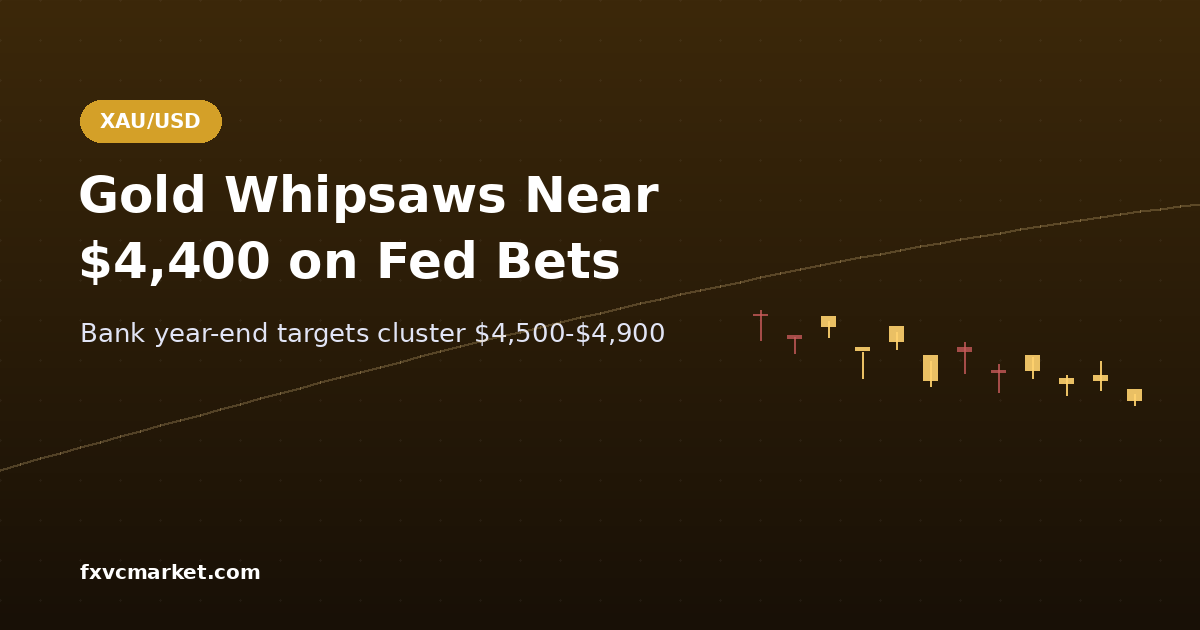
Gold has had a genuinely volatile few weeks. Spot prices are currently trading in the $4,430–$4,460 area — roughly 3% below the recent high near $4,698 — after Fed Chair Kevin Warsh’s hawkish Jackson Hole speech firmed up the dollar and pulled rate-hike odds sharply higher.
From record highs to a hawkish reset
Even after the pullback, August was still one of gold’s strongest months of the year, with prices up roughly 10% on the month at one stage. But the metal remains well below its January 29, 2026 record near $5,600, and the September 16 Fed decision has reset the near-term picture: with the hike delivered, several desks expect gold to retest the $4,215 area and potentially the broader $3,900–$4,200 zone before finding firmer footing.
Where the big banks see gold by year-end
Despite the near-term chop, year-end 2026 targets from major banks still cluster meaningfully above current spot levels: Goldman Sachs at $4,900, Wells Fargo at $4,900–$5,100, HSBC at $4,750, UBS at $4,600, J.P. Morgan at $4,500, Morgan Stanley at $4,450, and Bank of America at the more conservative end near $4,250. The spread between those numbers is itself informative — it shows just how much the next few Fed meetings could swing the outcome either way.
One structural support that hasn’t gone away: central bank buying. The World Gold Council reported 288.9 tonnes of net central bank gold purchases in Q2 2026 alone, up 62% year-over-year and the strongest second quarter on record. Q3 figures aren’t due until after September 30, but that pace of official-sector demand has been a consistent floor under the market all year.