

10 November 2026: The US Bureau of Labor Statistics releases October’s Consumer Price Index (CPI) today at 8:30 am Eastern time (6:30 pm Pakistan time). After September’s hot reading, this report is one of the most important data points before the Federal Reserve’s 8–9 December meeting, where markets see a real chance of another rate hike.
Key points:
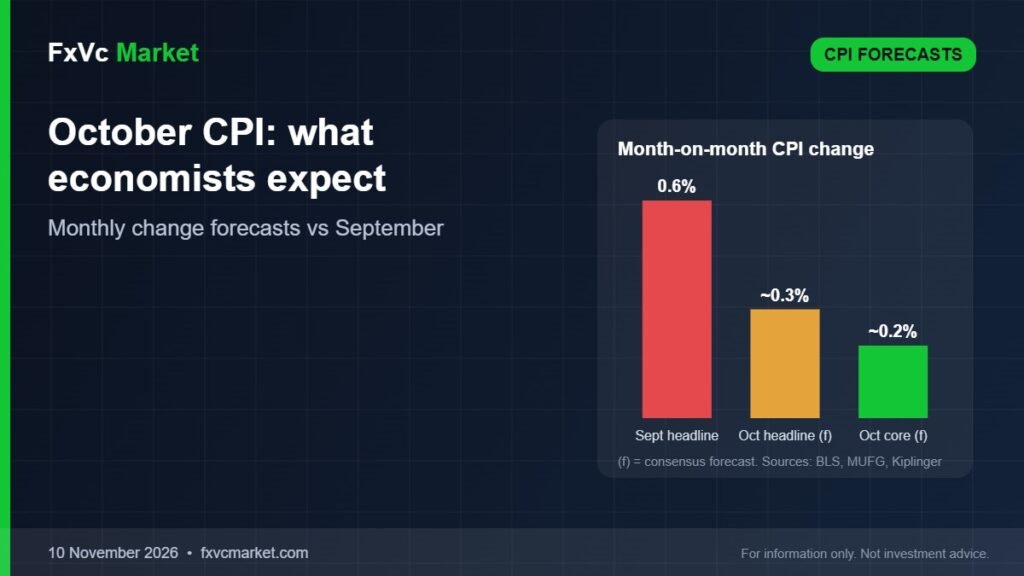
- Economists expect headline CPI to rise about 0.3% month on month in October, after a 0.6% jump in September.
- Core CPI (excluding food and energy) is forecast to rise around 0.2%.
- In September, headline inflation was 3.7% year on year and core inflation 2.6%.
- Because of gaps in data from the 2025 government shutdown, the BLS says some 12-month changes for October may not be published, so the monthly figures are the ones to watch.
What happened last month
September’s CPI rose 0.6% in a single month and 3.7% from a year earlier, up from 3.4% in August, according to the BLS. Energy did most of the damage: gasoline prices were up 34.2% over the year and fuel oil 74.2%, as conflict involving Iran pushed up oil prices. Core inflation, which strips out food and energy, was calmer at 2.6% year on year, but still above the Fed’s 2% goal.
What economists expect for October
| Measure | September (actual) | October (forecast) |
| Headline CPI, month on month | +0.6% | About +0.3% |
| Core CPI, month on month | +0.3% | About +0.2% |
| Headline CPI, year on year | 3.7% | Around 3.9%–4.0% (may not be published) |
| Core CPI, year on year | 2.6% | Around 2.8% (may not be published) |
Forecasts vary slightly. MUFG expects headline CPI of 0.29% and core of 0.23% month on month, while the Cleveland Fed’s inflation nowcast points to around 0.24% and 0.21%. Oil prices fell sharply after the midterm elections, which could help cool energy costs in coming months, but most of that drop came in November, after the October data period.
Why the data gap matters
The BLS has said it will not publish 12-month percent changes for October 2026 for indexes where October 2025 data are not available, a result of the government shutdown last year. That means headlines may focus on the monthly change instead of the familiar annual rate, and traders should be ready for some confusion in early reporting.
How markets could react
- Hotter than expected (0.4% or more): would strengthen the case for a December Fed hike. That could push Treasury yields and the US dollar higher, and weigh on stocks and gold.
- In line (around 0.3%): markets may react modestly, with attention shifting to Friday’s producer price data and Fed comments.
- Cooler than expected (0.2% or less): could ease pressure for another hike, lowering yields and the dollar and supporting stocks and gold.
The backdrop is already tense. The October jobs report showed 165,000 new jobs, far above forecasts, and Fed Governor Christopher Waller has said he sees a December hike as likely. Read: The Fed is raising rates again in 2026.
What it means for traders and investors
- Expect fast moves and wider spreads in the minutes after 8:30 am ET, especially in EUR/USD, USD/JPY, gold and US index futures.
- Avoid placing large trades just before the release. See our new guide: How to trade the CPI report in forex.
- Long-term investors should focus on the trend in inflation over several months, not a single report.
Risk warning: Trading forex, CFDs and other leveraged products carries a high level of risk, and you could lose money rapidly. Market figures in this article are based on reports available at the time of writing and may change. This article is for information only and is not investment advice.
Sources
- CNBC: CPI inflation report, September 2026
- US Bureau of Labor Statistics: Consumer Price Index
- Kiplinger: October CPI report – what to expect
- MUFG Research: US inflation update
- FXStreet: US CPI data expected to ease in October
- FactSet: October CPI projected to rise 4.0% year over year
 Raheel Abbas