

10 November 2026: The Bank of England (BoE) raised interest rates last week as inflation pressures linger, joining the US Federal Reserve and the Reserve Bank of Australia in a renewed round of tightening. The pound briefly rose above $1.35 before giving back gains as the US dollar strengthened.
Key points:
- The BoE raised Bank Rate by 0.25% to 4.00% on 5 November.
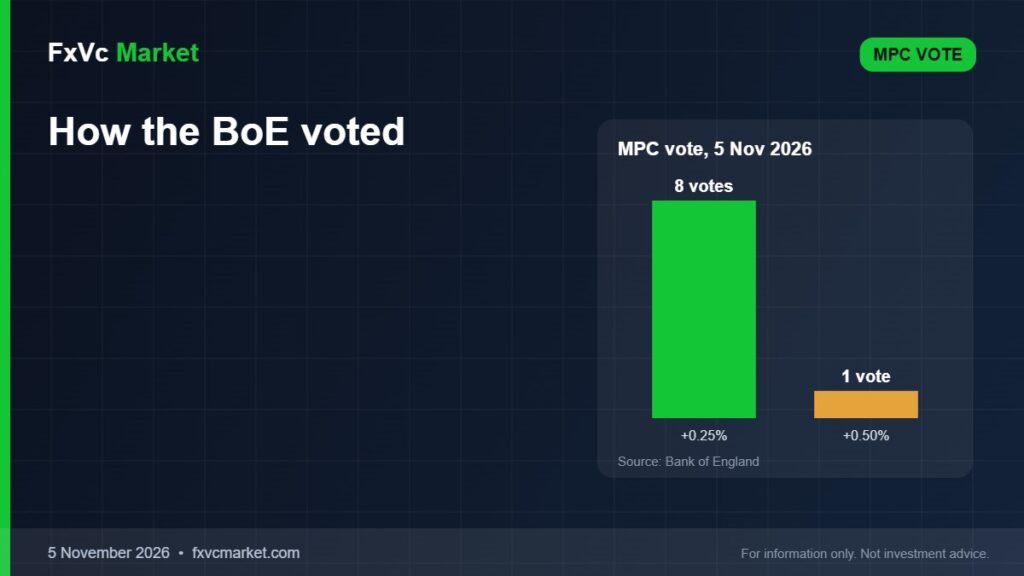
- Eight of nine Monetary Policy Committee members voted for the hike; Catherine Mann voted for a larger 0.50% increase.
- Governor Andrew Bailey said further rises could not be ruled out.
- GBP/USD briefly topped 1.3500, then eased to around 1.3450 and later near 1.3370 as the dollar rallied on strong US jobs data.
- The next BoE decision is on 17 December, the same day as the European Central Bank.
Why the BoE hiked
Like other central banks, the BoE is dealing with inflation that has been pushed higher by energy prices. Raising rates is designed to cool demand and stop higher prices from becoming entrenched in wages and services. With one member pushing for an even bigger move, the vote leaned hawkish, which supported sterling at first.
How the pound reacted
GBP/USD climbed above 1.3500 immediately after the decision, then slipped back to around 1.3450. By Friday it was trading near 1.3366 after the US dollar index jumped about 0.7% on a blowout US jobs report. This shows how sterling is pulled by both UK and US rate expectations. See how the jobs report lifted US yields.
The global picture: central banks are hiking again
| Central bank | Latest move | Policy rate |
| Bank of England | +0.25% (5 Nov) | 4.00% |
| US Federal Reserve | Hold (28 Oct), after +0.25% in Sept | 3.75%–4.00% |
| Reserve Bank of Australia | +0.25% (3 Nov) | 4.85% |
With the BoE’s Bank Rate now matching the top of the Fed’s range, small changes in expectations for either central bank can move GBP/USD. Read about the RBA’s hike to 4.85% and the Fed’s 2026 hikes.
Other currencies this week
- US dollar: fell to a one-month low after the midterm elections, then rebounded on the jobs report. Today’s US CPI is the next big test. See our CPI preview.
- Euro: traded around $1.12–1.13; analysts flagged concerns over France’s budget and fading expectations of further ECB tightening.
- Japanese yen: around 158 per dollar, supported by Bank of Japan minutes that kept rate-hike bets alive.
What to watch for GBP/USD
- US CPI (10 November) and UK GDP data this week.
- UK inflation data later in November.
- Comments from BoE officials about the pace of further hikes.
- The 17 December BoE and ECB decisions.
Central bank weeks can bring sharp moves in sterling. Keep position sizes small and use a stop-loss. Our guide to trading data releases explains how to plan around big events.
Risk warning: Trading forex, CFDs and other leveraged products carries a high level of risk, and you could lose money rapidly. Market figures in this article are based on reports available at the time of writing and may change. This article is for information only and is not investment advice.
Sources
- TMGM: BoE lifts rate to 4%
- TradingNews: GBP/USD after BoE hike to 4%
- CNBC: Dollar edges lower as election outcome cheers markets
- FXStreet: Euro rangebound against the pound
- Lamera Capital: November 2026 economic calendar
 Abdullah Munir