

13 November 2026: The yield on the 10-year US Treasury note briefly rose above 5% this week after hotter-than-expected inflation data, and the 30-year yield is above 5.2%. These are among the highest levels in nearly two decades. Treasury yields can sound like a topic only for professional investors, but they affect almost everyone, from savers and home buyers to anyone with a pension or investment account.
Key points:
- A Treasury yield is the return investors earn for lending money to the US government.
- The 10-year yield is a benchmark for borrowing costs around the world, including mortgages.
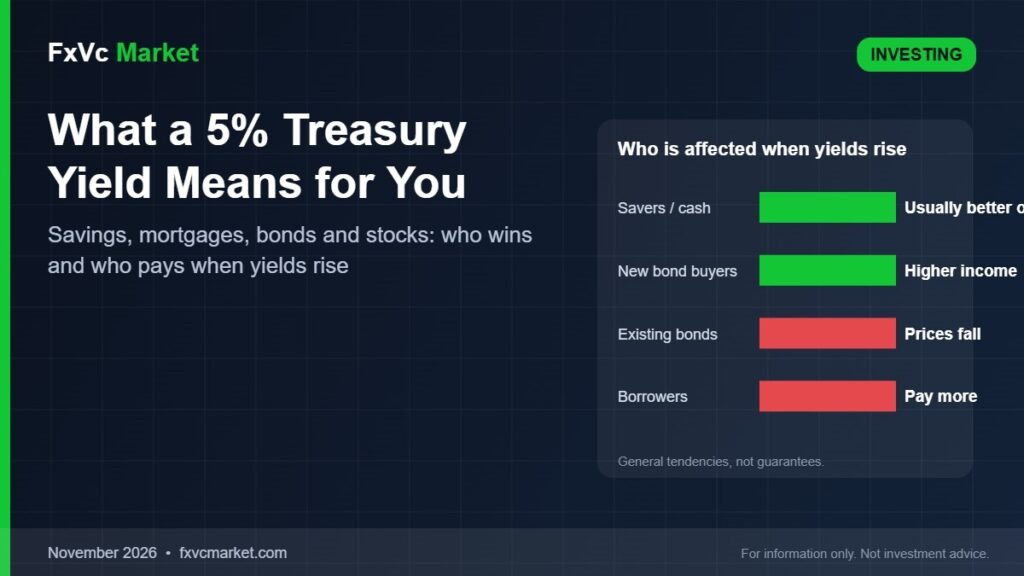
- Higher yields are generally good news for savers and new bond buyers, but bad news for borrowers and for the price of bonds you already own.
- The key driver right now is inflation, and the expectation that the Fed will raise rates again in December.
What is a Treasury yield, in simple terms?
When you buy a US Treasury bond, you are lending money to the US government. The yield is the annual return you receive. Yields move up and down every day as investors buy and sell bonds. When investors expect higher inflation or higher Fed interest rates, they demand a higher return, so yields rise and the prices of existing bonds fall.
Why yields have risen to 5%
- Inflation: October’s CPI showed prices still rising faster than the Fed wants. See Hot CPI sends yields soaring.
- Fed rate hikes: the Fed raised rates in September and markets now expect another increase in December.
- A strong jobs market: the October jobs report showed 165,000 new jobs, far above forecasts.
- Government borrowing: large amounts of new US government debt mean more bonds need buyers.
What it means for you
| If you are… | What higher yields usually mean |
| A saver with cash | Savings accounts, money market funds and short-term bonds tend to pay more, though rates vary by bank and country |
| Buying bonds now | You can lock in higher income than in recent years |
| Already holding bonds or bond funds | The market value of your existing bonds falls when yields rise, although you still receive the interest |
| A home buyer or borrower | Mortgage and loan rates tend to stay high, making borrowing more expensive |
| A stock investor | Higher yields can weigh on share prices, especially fast-growing technology stocks |
| A forex trader | Higher US yields have helped push the dollar to a 19-month high |
Practical steps to consider
- Shop around for savings rates: not every bank passes on higher rates, so compare.
- Match bonds to your time horizon: if you may need the money soon, shorter-term bonds are less sensitive to rate changes.
- Avoid panic selling: falling bond prices are painful, but bonds held to maturity still repay their face value if the issuer does not default.
- Review debt: variable-rate loans become more expensive as rates rise; consider whether paying down expensive debt makes sense for you.
- Stay diversified: a mix of assets helps smooth out the impact of rising rates.
Could yields go higher?
That depends mainly on inflation and the Fed. If inflation stays hot and the Fed hikes by more than expected, yields could climb further. If inflation cools, yields may ease. Nobody can predict the path with certainty, which is why diversification and a long-term plan matter more than trying to time the market. For more on the Fed, read why the Fed is raising rates again in 2026.
Risk warning: The value of investments can go down as well as up, and you may get back less than you invest. Bond prices fall when interest rates rise. This article is general information only and is not personal financial or investment advice; consider speaking to a qualified adviser.
Sources
- CNN: Bond yields surge most in 19 months
- CNBC: Treasury yields and the 30-year bond
- Raisin: October CPI recap and cash yields
- US Treasury: TreasuryDirect
 Raheel Abbas